Reviewed by Joe Schwartz, owner of Mr. Spring Garage Doors. Last updated July 24, 2026.
Quick answer: changing out a garage door spring involves releasing hundreds of pounds of stored tension, then winding a new spring to the exact turn count your door needs. It's not a complicated concept, but the margin for error is small and the consequences of a mistake are serious. Here's exactly what the job involves, what it takes to do it safely, and why most people who understand the full process end up calling a pro.
Spring replacement isn't a simple parts swap. It's a precision job that requires the right tools, a correctly sized replacement spring, and the ability to safely manage a large amount of stored mechanical energy.
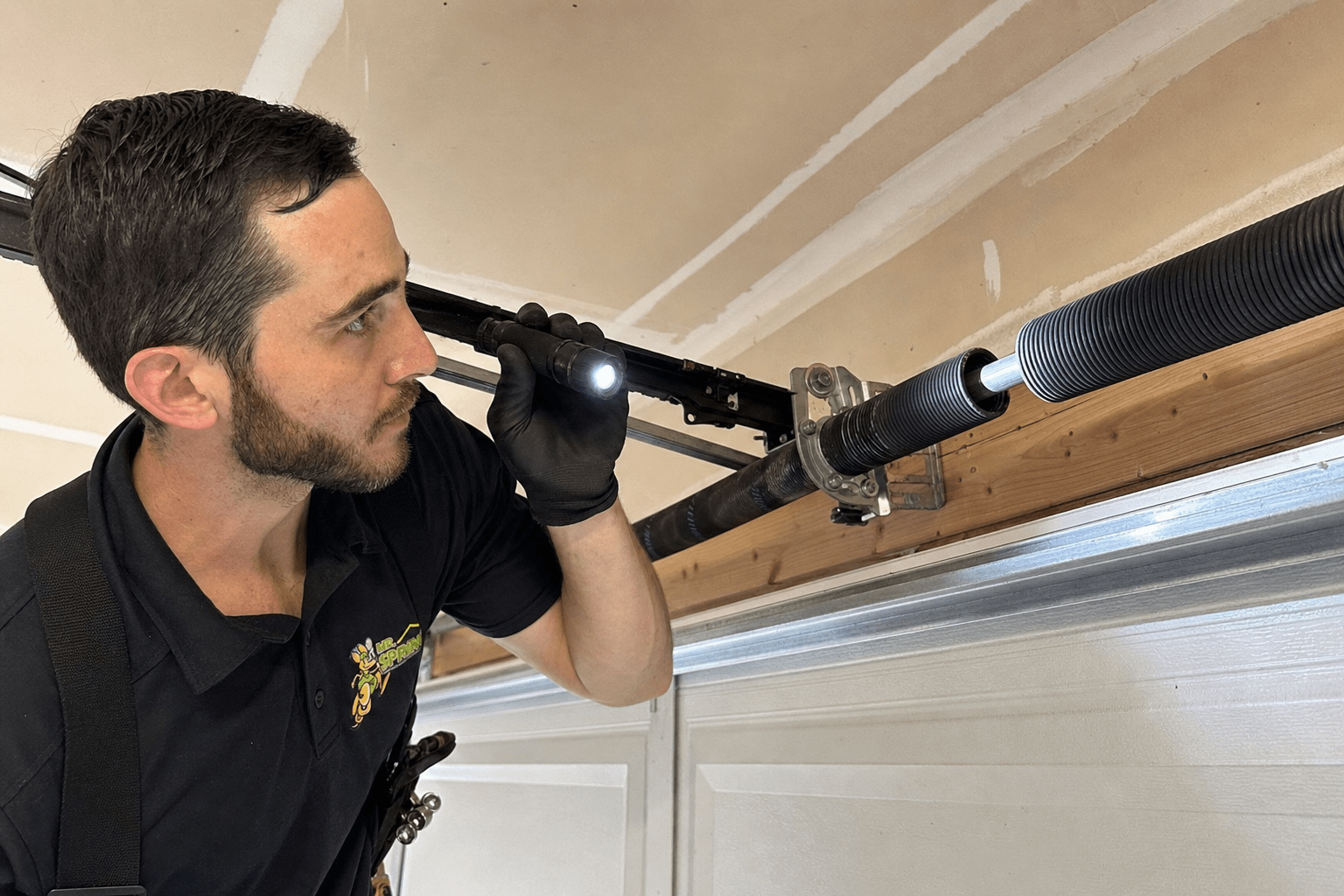
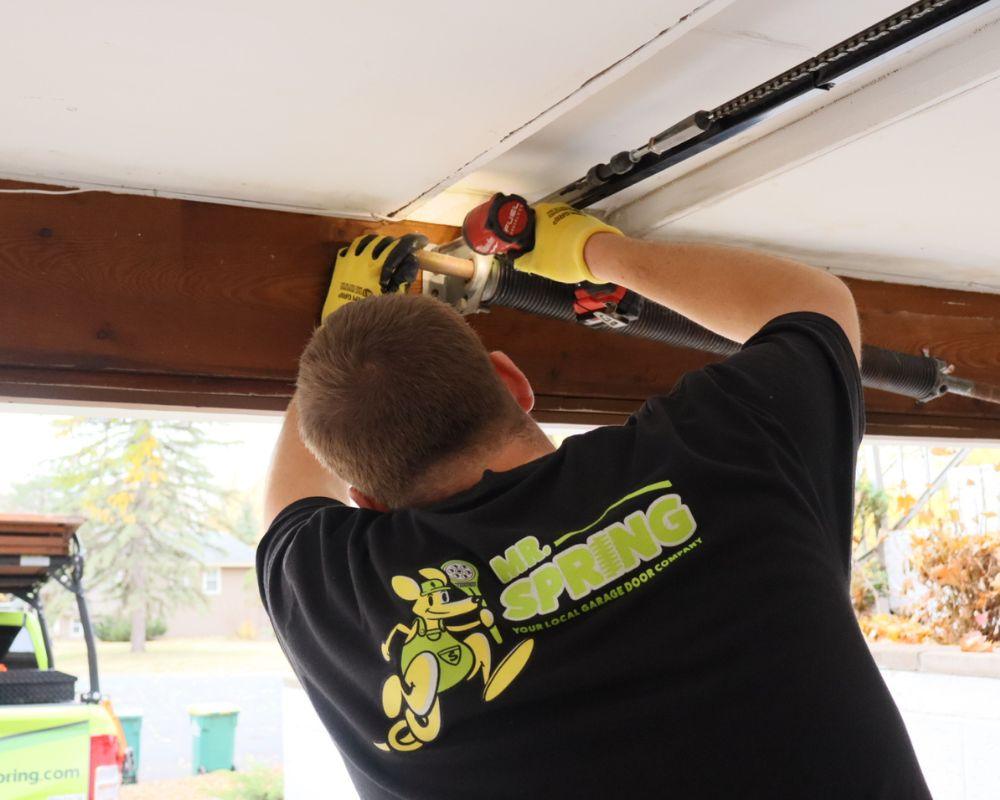
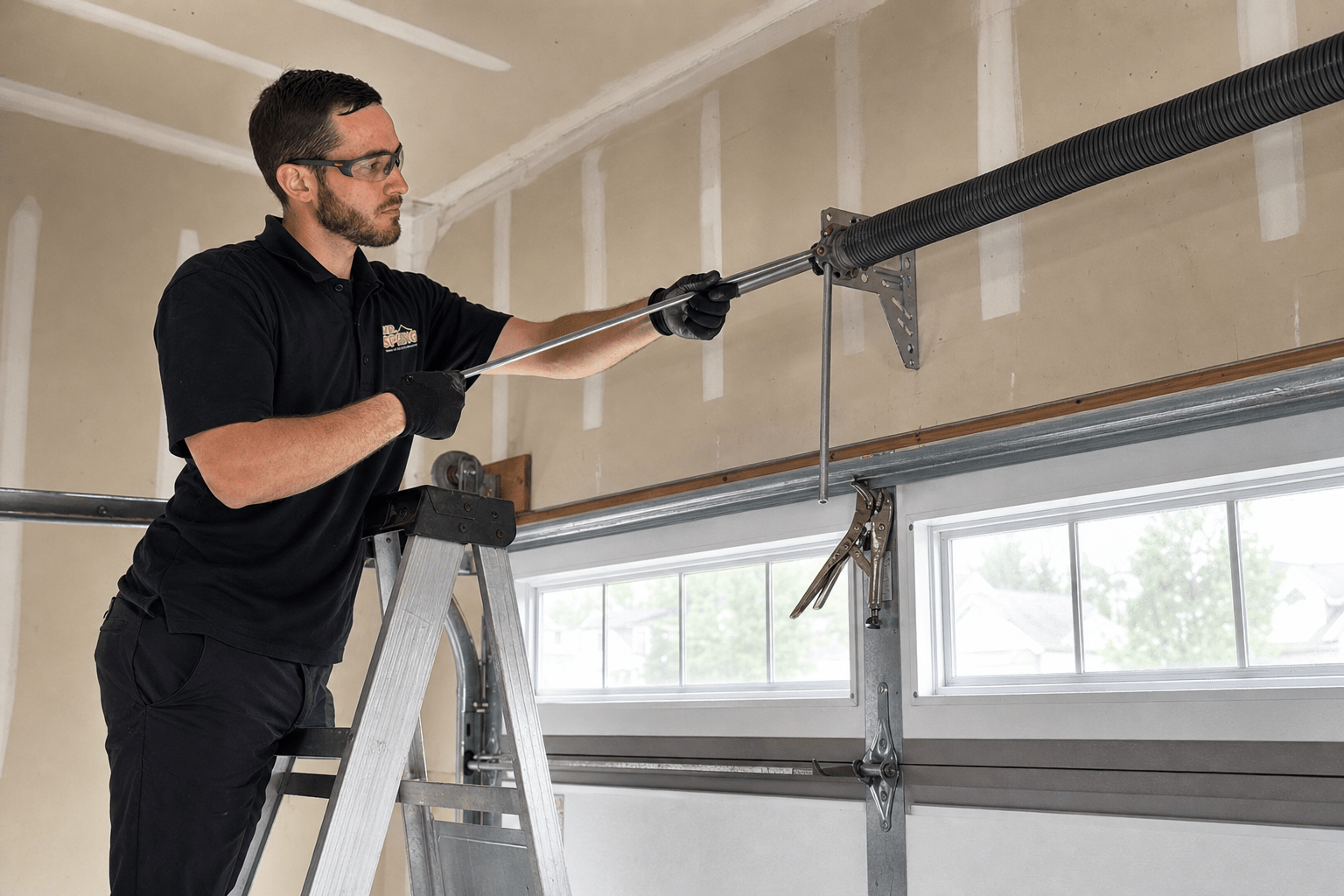
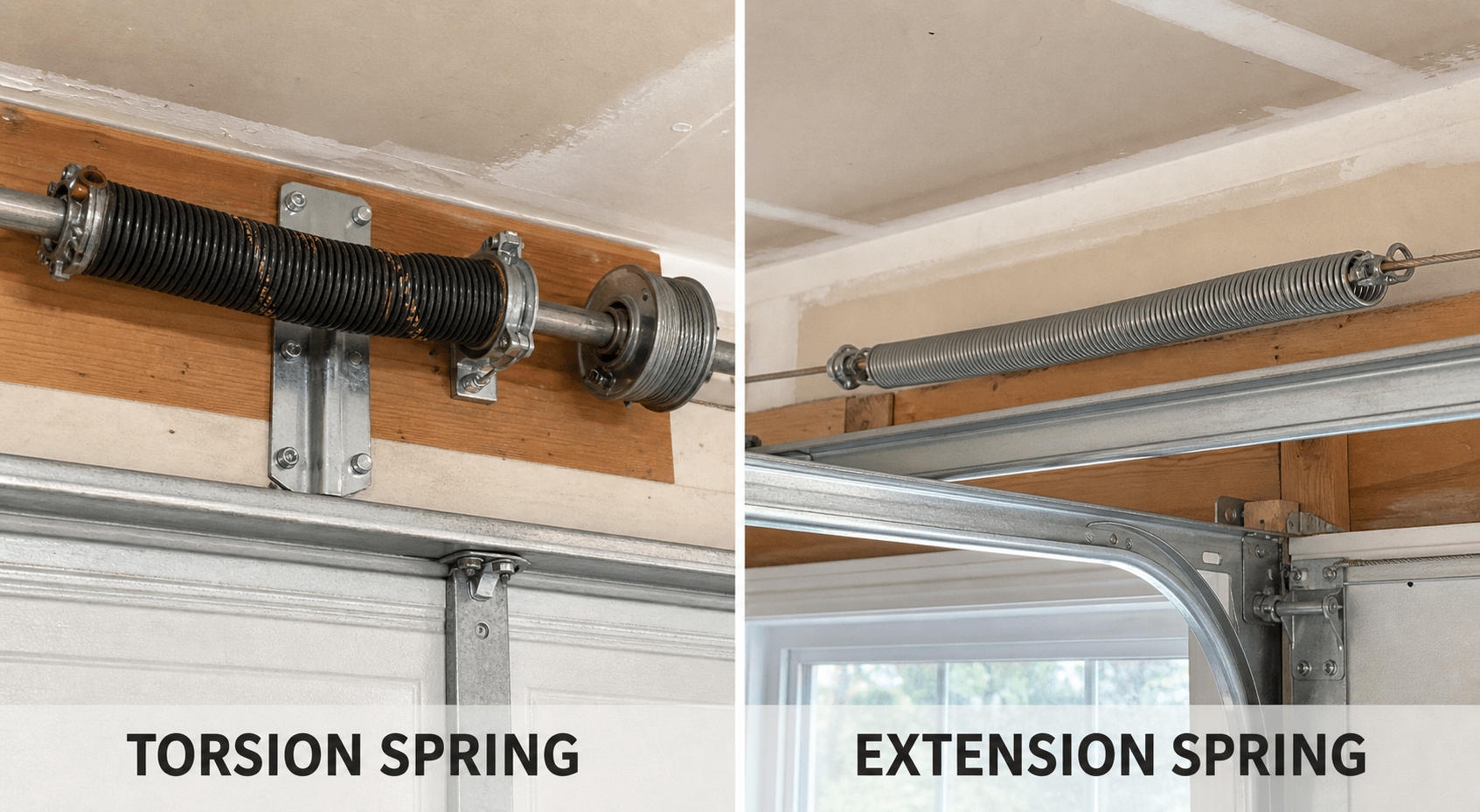
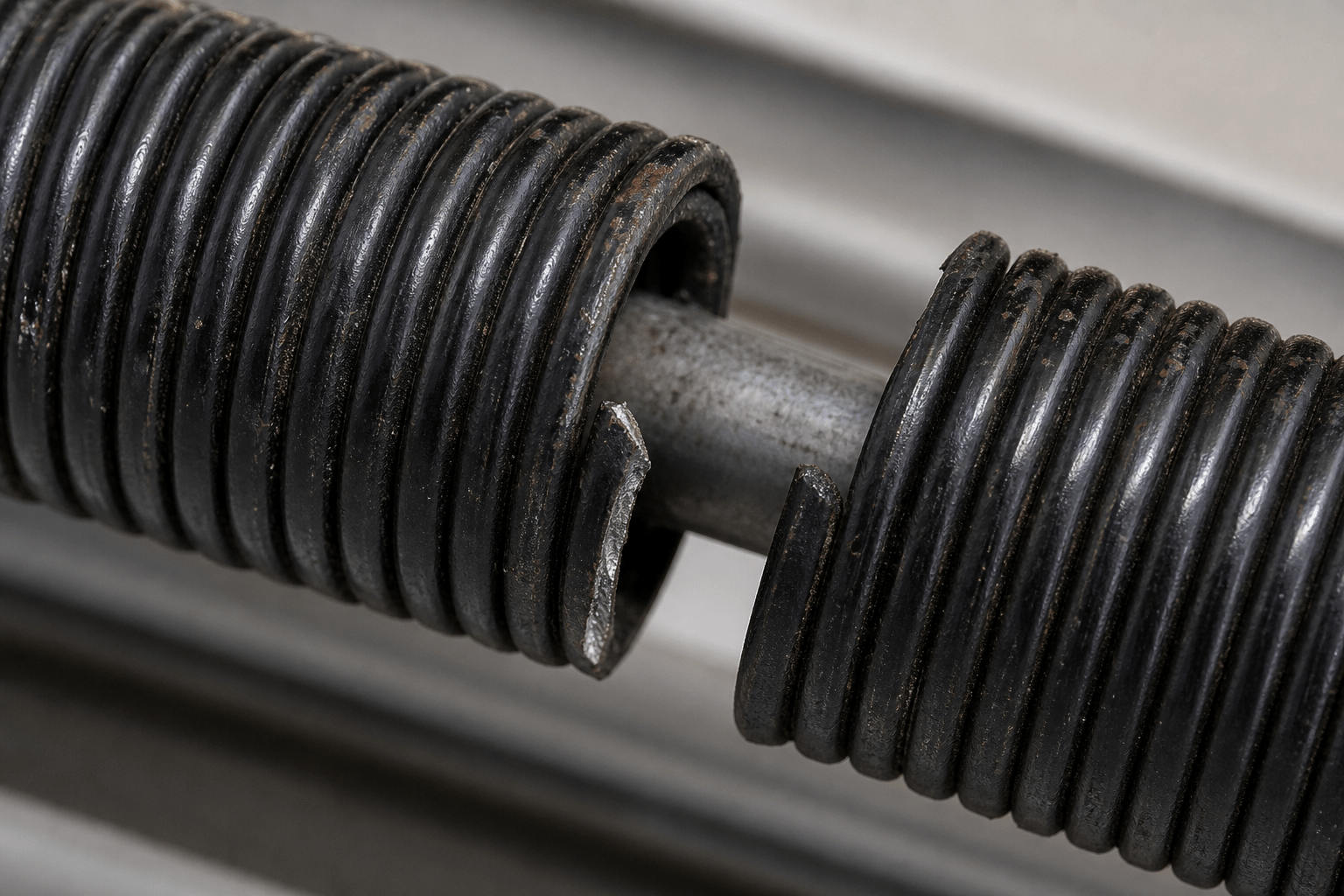
For torsion springs, the horizontal spring mounted above the door, the job means releasing tension from a fully wound spring, removing it from the shaft, installing a replacement sized to your door, and winding that new spring to the exact tension your door's weight requires. Off by even a few turns, and the door either slams shut or won't close all the way.
For extension springs, the springs running along the side tracks, the process is more physically accessible but still involves working with springs under real tension. Safety cables need to be present and intact before anything gets touched.
The most common mistake homeowners make is treating the spring like a part that simply bolts on. In reality, spring tension is what counterbalances the door's full weight, typically 150 to 500 pounds on a standard two-car door. The opener is only designed to assist a properly balanced door, not lift the weight on its own. If the tension is off after a replacement, the opener strains and burns out early, the cables wear unevenly, or the door itself becomes a safety hazard.
Most homeowners don't have the tools this job needs, and the most important ones can't be substituted.
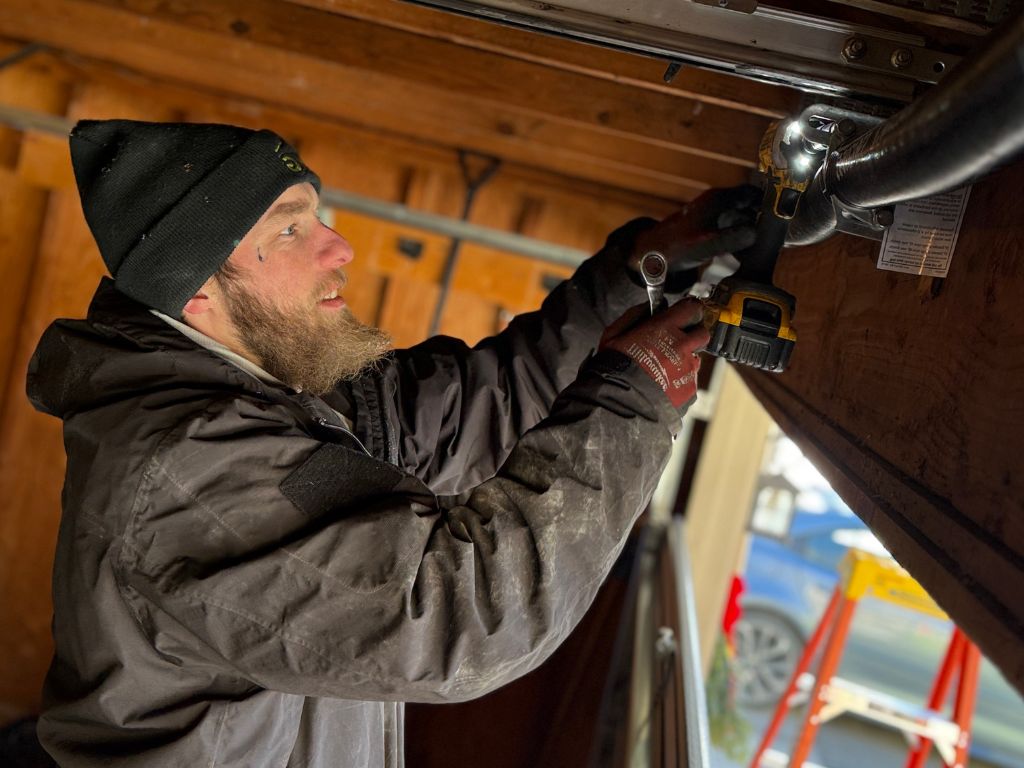
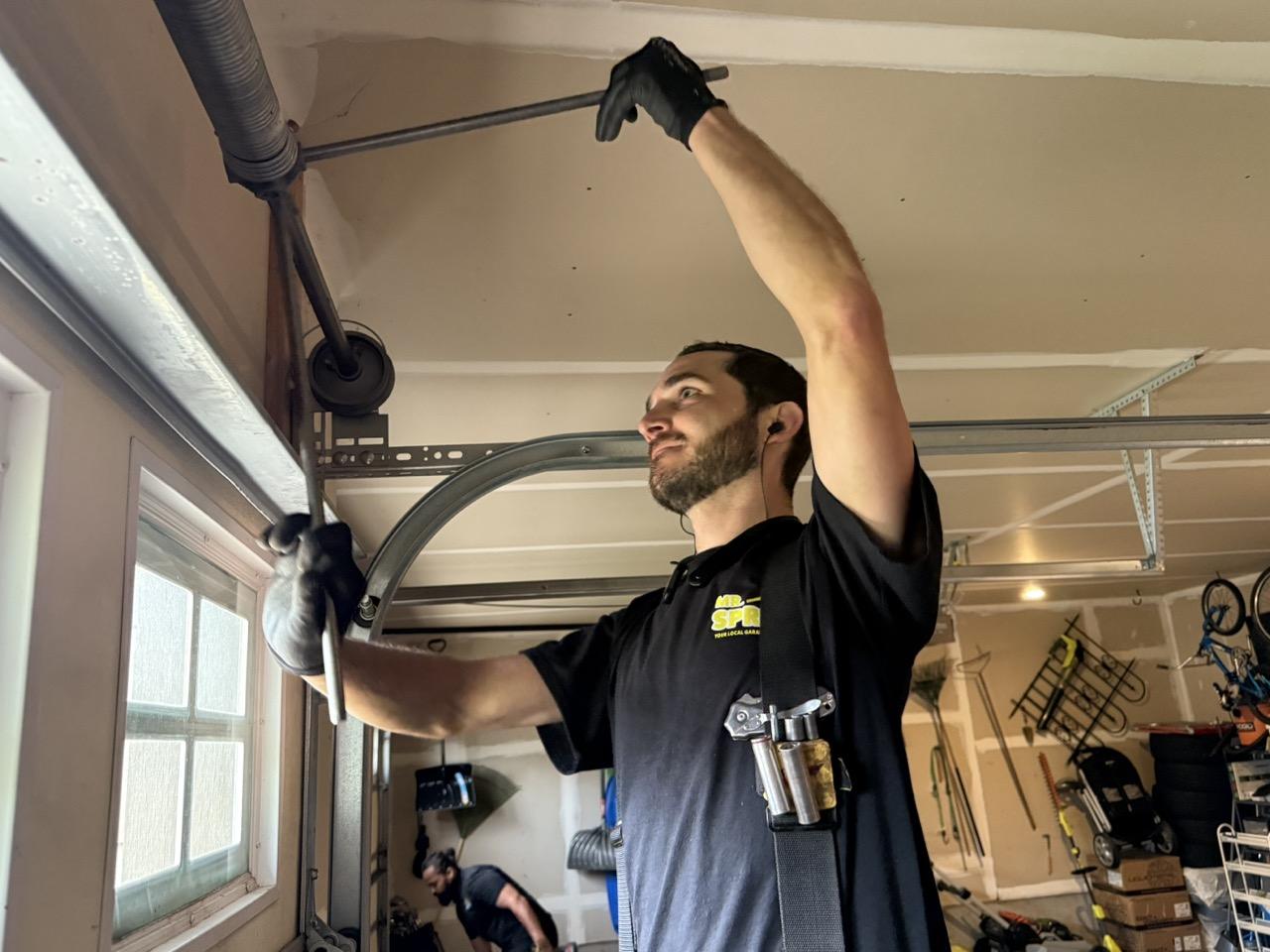
Winding bars (two required): solid steel bars sized to fit your spring's winding cone exactly. Using a screwdriver, pliers, or any improvised substitute is how serious injuries happen, the bars are what transfer force away from your body if a spring slips.
The correct replacement spring: springs are sized to your door's exact weight and height, not just to how the old one looks. Getting it right means knowing the door's weight, height, and the old spring's wire size, inside diameter, and length.
C-clamps or locking pliers: to secure the door to the tracks while you work, so it can't move unexpectedly mid-job.
A second person: working alone on a spring under tension is meaningfully more dangerous. A helper holds the door steady, hands over tools, and is there if something goes wrong.
Wrenches, a drill, a sturdy ladder: standard equipment, but the winding bars are what separate a manageable job from a dangerous one.
A wound torsion spring stores 200 to 300 pounds of tension, tension that releases instantly if a winding bar slips or a set screw fails mid-winding.
That risk climbs in a Minnesota winter. Steel gets measurably more brittle as it cools, a well-documented materials-science effect called the ductile-to-brittle transition, and it makes a fatigued spring more likely to snap suddenly rather than show warning signs first. The Twin Cities average 82 days a year with lows at or below 20°F, more than a tenth of the calendar, according to NOAA climate normals. That's a lot of winter mornings where a spring that's already worn down from years of cycling is sitting at exactly the kind of temperature that makes a clean, sudden break more likely.
The winding bars themselves become the danger point if they come loose under load. An improperly sized or improvised bar is far more likely to slip in the first place. The most common injuries are broken fingers and hands from bars spinning out of control, facial injuries from bars or spring components striking someone, and crush injuries from a door dropping unexpectedly.
Garage door and spring-related injuries send thousands of people to the emergency room every year, based on injury data the Consumer Product Safety Commission tracks through its National Electronic Injury Surveillance System, with spring and cable components responsible for a notable share of the more serious injuries, the kind involving lacerations, fractures, and crush trauma rather than minor bumps and scrapes.
This isn't a case of being overly cautious. It's simple physics: a spring wound to counterbalance a 250-pound door has enough stored energy to cause serious, permanent injury in a fraction of a second. Tutorial videos make the process look manageable because they show it going right. Technicians who've seen it go wrong know to respect the spring in ways that don't come through on video.
Extension springs run along the side tracks and are more physically accessible than torsion springs, but "more accessible" doesn't mean safe.
Extension springs must always have a safety cable threaded through them before any work begins. A snapped extension spring without a cable in place can cross a two-car garage in well under a second.
Working on extension springs requires the door to be fully closed and clamped, and the spring has to be fully de-tensioned before it's disconnected. They also need a correctly matched replacement spring, sized to the door's weight, a wrong spring here causes the same calibration problems a torsion mis-wind does.
On an older home where extension springs have been in place for a decade or more, there's a real chance the safety cables are missing, degraded, or were never installed correctly. Verifying that before starting anything is essential.
Bottom line on extension springs: lower risk than torsion DIY, but still a job that requires the correct spring, confirmed safety cables, and a properly secured door. Most homeowners who start this job run into at least one complication they didn't expect.
Professional spring replacement in the Twin Cities runs $200 to $500 for most jobs, parts and labor included. Same-day or emergency calls typically add 25 to 50 percent on top of that.
Compare that to the realistic cost of things going wrong:
An ER visit for a hand or wrist injury from a slipped winding bar can run $1,500 to $8,000 or more out of pocket, depending on whether the injury requires surgery and what insurance covers.
A full garage door replacement, if cables snap unevenly or the door comes off its track, runs $753 to $1,701, averaging $1,227, according to Angi's current 2026 data.
A professional visit also typically replaces both springs at once. The most common DIY outcome is replacing only the spring that broke and leaving the equally worn second spring to fail within weeks.
Labor time for a pro typically runs 45 minutes to 2 hours depending on spring type and door size, with no time lost sourcing the correct spring, watching tutorials, or recovering from a mis-wind. The case for DIY is strongest when a homeowner already has the specific winding bars, prior hands-on experience, and a helper on hand, a combination that's genuinely rare.
Changing out a garage door spring is one of the few home repair jobs where "just be careful" isn't enough. The tools, the tension math, and the injury risk all put it firmly in professional territory.
The cost of professional garage door spring replacement is easy to justify once you weigh it against the alternatives: an ER visit, a burned-out opener, or a door off its tracks all cost far more than the service call itself.
If your spring just broke, clamp the door, disconnect the opener, and don't use it. Same-day service is available across the Twin Cities, and the job gets done right in under two hours.
Mr. Spring handles garage door spring replacement near me searches across the Twin Cities metro, with same-day service and transparent, upfront pricing. Call or request a quote online.
At Mr. Spring Garage Doors, we don't perform surface-level tune-ups. We deliver detailed inspections designed to catch issues early and prevent costly system failures. Our technicians are trained to identify wear patterns that less experienced providers often miss, helping you avoid unnecessary repairs and replacements.
Preventative maintenance is not an upsell. It is a smart investment in reliability, safety, and long-term cost control. Waiting for a breakdown often leads to more extensive damage and higher repair costs.
We are a locally owned and operated business serving the Twin Cities metro. Our owner, Joe Schwartz, is a lifelong Minnesotan who understands firsthand the demands that Minnesota weather places on garage door systems year-round. Every maintenance visit we perform is built around protecting your system for the long haul, not just getting through the call.
If your garage door has not been professionally serviced within the past year, now is the time. Schedule your maintenance today and keep your system running smoothly while avoiding unexpected expenses.