Quick answer:professional garage door spring replacement in Minneapolis and St. Paul runs $250 to $600 per spring for torsion, with high-cycle springs included at the upper end of that range. Extension springs run $200 to $450 per spring. Most doors use two springs and both should be replaced together, so a standard job lands between $500 and $1,200. Here's the real breakdown, what pushes the price up or down, and why this isn't a job to save money on by doing it yourself.
In Minneapolis and St. Paul, torsion spring replacement runs $250 to $600 per spring, and that range already includes high-cycle springs at the top end. Extension springs run $200 to $450 per spring. These are our own current prices rather than national averages, so what you see here is what we actually charge.
Most homes have either one or two torsion springs mounted above the door, or two extension springs running along the side tracks. A double garage door with two torsion springs is the most common setup, and most service calls involve replacing both springs together rather than just one. On a standard two-spring door, that puts a complete job between $500 and $1,200 depending on spring type and door size.
| Spring Setup | Typical Cost (Minneapolis and St. Paul) | Notes |
|---|---|---|
| Torsion spring (per spring) | $250–$600 | High-cycle included at the upper end |
| Extension spring (per spring) | $200–$450 | More common on older doors |
| Standard two-spring door | $500–$1,200 | Both springs replaced in one visit |
| Two doors, same visit | Quoted on site | One trip charge covers both |
| Service call | Free | Many companies in the metro charge $29–$150 |
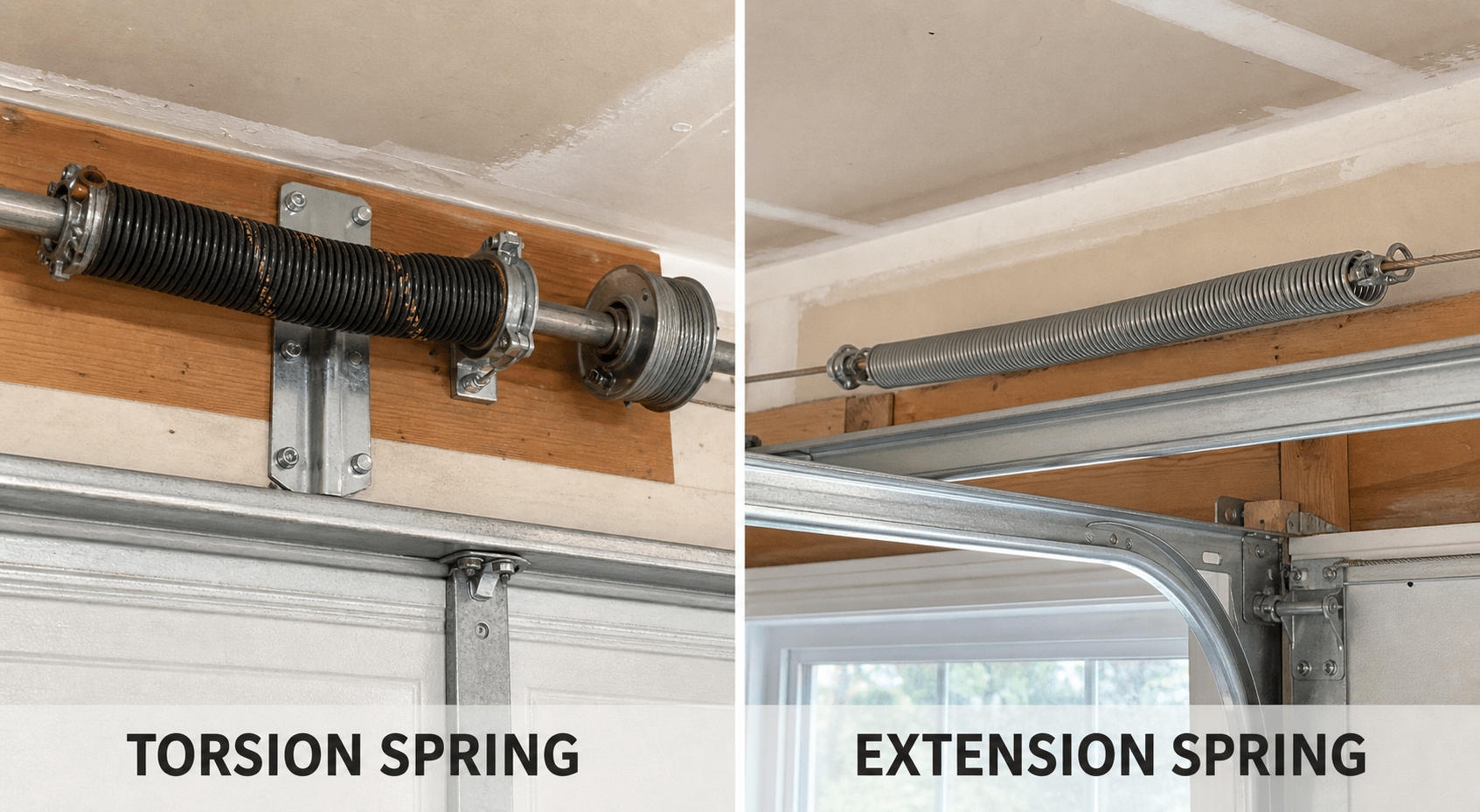
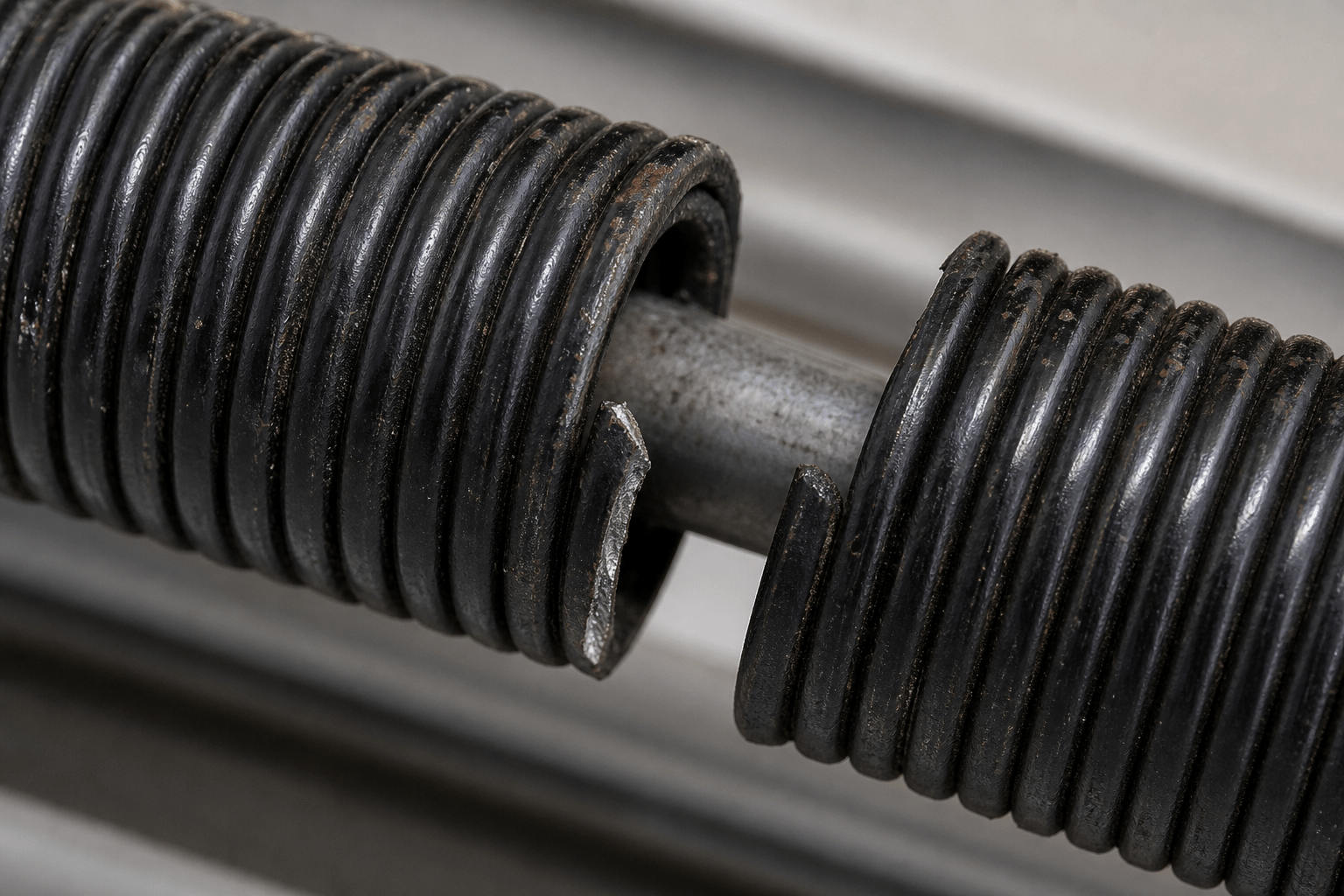
Torsion springs sit horizontally above the door on a metal shaft. They're the more common type in homes built or updated after the mid-1990s, and they cost somewhat more to replace than extension springs, but they're significantly safer and last longer.
Extension springs run along the side tracks, one on each side of the door. They're less expensive but older technology, and if one snaps without a safety cable in place, it can fly across the garage rather than staying contained.
Cost-wise, torsion replacement runs $250 to $600 per spring while extension runs $200 to $450 per spring. Torsion costs more because of the specialized winding bars and precise tension calibration the job requires, and because the springs are built to last longer.
If you currently have extension springs and the rest of your door is in good shape, ask your technician whether converting to torsion at the time of replacement makes sense. It's not always necessary, but it adds both longevity and safety, and it's far cheaper to do at the same visit than as a separate job later.
Standard vs. high-cycle springs.Standard residential springs are rated for about 10,000 cycles, roughly 7 years at 4 cycles a day. High-cycle springs are rated for 20,000 or more, and we include them within the $250 to $600 range rather than charging a separate upgrade fee. Worth asking for at replacement.
Door size and weight. Heavier or oversized doors, including wood-panel and two-car carriage-house styles, need heavier-duty springs that cost more to source and require more tension to wind correctly.
Emergency or same-day service. Most companies charge a premium for after-hours, weekend, or same-day visits, commonly 25 to 50% over standard pricing. This premium shows up most often in January through March, when cold-weather spring failures spike and same-day slots book up fast.
Additional repairs found on-site.A technician may find frayed lift cables, worn rollers, or bent tracks worth addressing at the same visit. Rollers run $100 to $300 per set and cables $125 to $300 per set. These are legitimate add-ons, not upsells, since a new spring working against a damaged cable or track wears out faster.
Cold weather doesn't snap a spring on its own, but it accelerates wear and exposes fatigue that's already there. Metal contracts as temperatures drop, which thickens lubrication and adds resistance to every open-and-close cycle. A spring that had some wear going into fall can hit its limit on a hard January morning that would've been a non-event in June.
That's why most Minnesota spring failures cluster between January and March, right when demand for garage door spring replacement peaks and same-day appointments are hardest to get.
At 4 to 6 cycles a day, typical for a garage used as a primary entry point, a standard 10,000-cycle spring lasts roughly 5 to 7 years in this climate, while a 20,000-cycle spring lasts closer to 10 to 14 years. Since we include high-cycle springs in our standard pricing, it's worth asking for them at replacement.
The short answer is almost always: replace both.
In a two-spring system, both springs cycle the same number of times, so if one has broken, the other has identical wear and is typically not far behind, often failing within weeks or months. Replacing both at the same visit costs meaningfully less than two separate service calls, since you're only paying one trip fee instead of two. Any reputable technician will recommend this. If someone quotes you for just one spring on a two-spring system, it's worth asking why before agreeing.
Torsion springs are wound to roughly 200 to 300 pounds of stored tension. Released the wrong way, that energy lets go instantly and can cause serious injury. The Consumer Product Safety Commission links garage doors to around 20,000 emergency room visits a year overall, with an estimated 1,500 of those specifically involving springs and other sharp components, not incidental bumps or pinches.
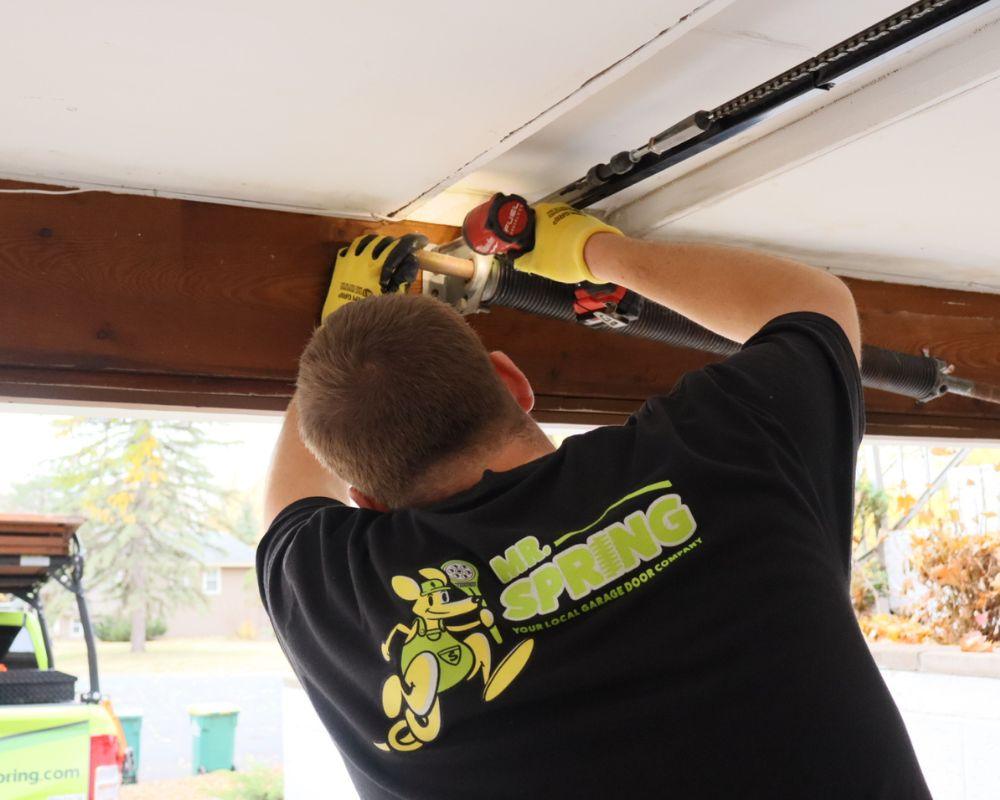
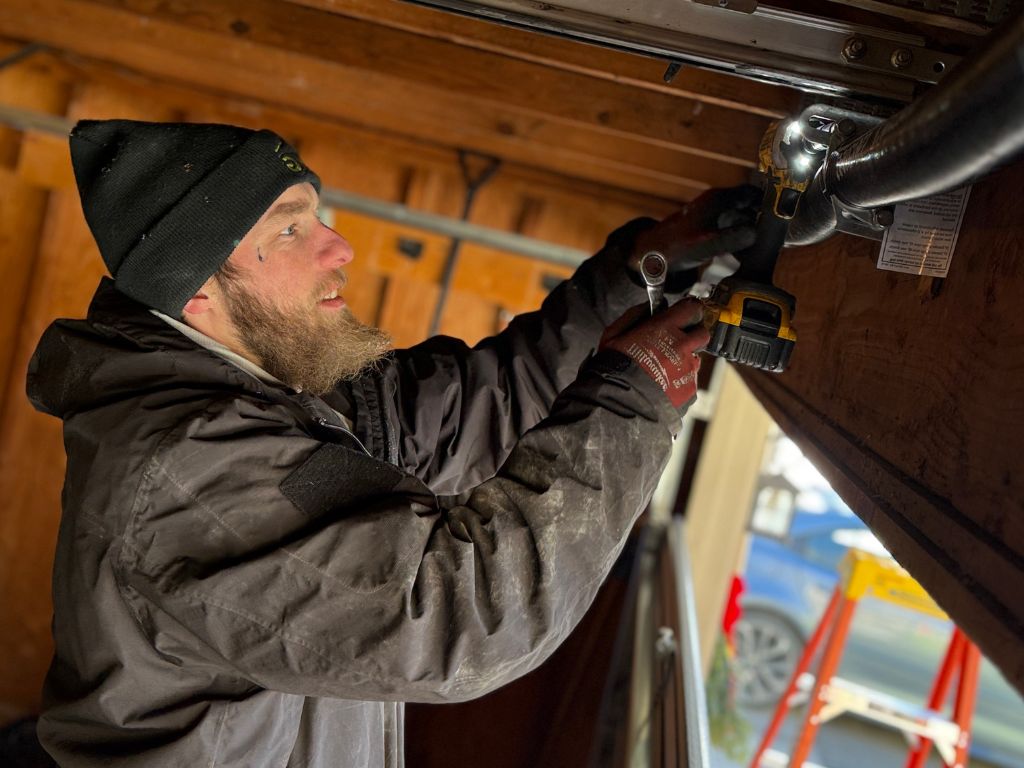
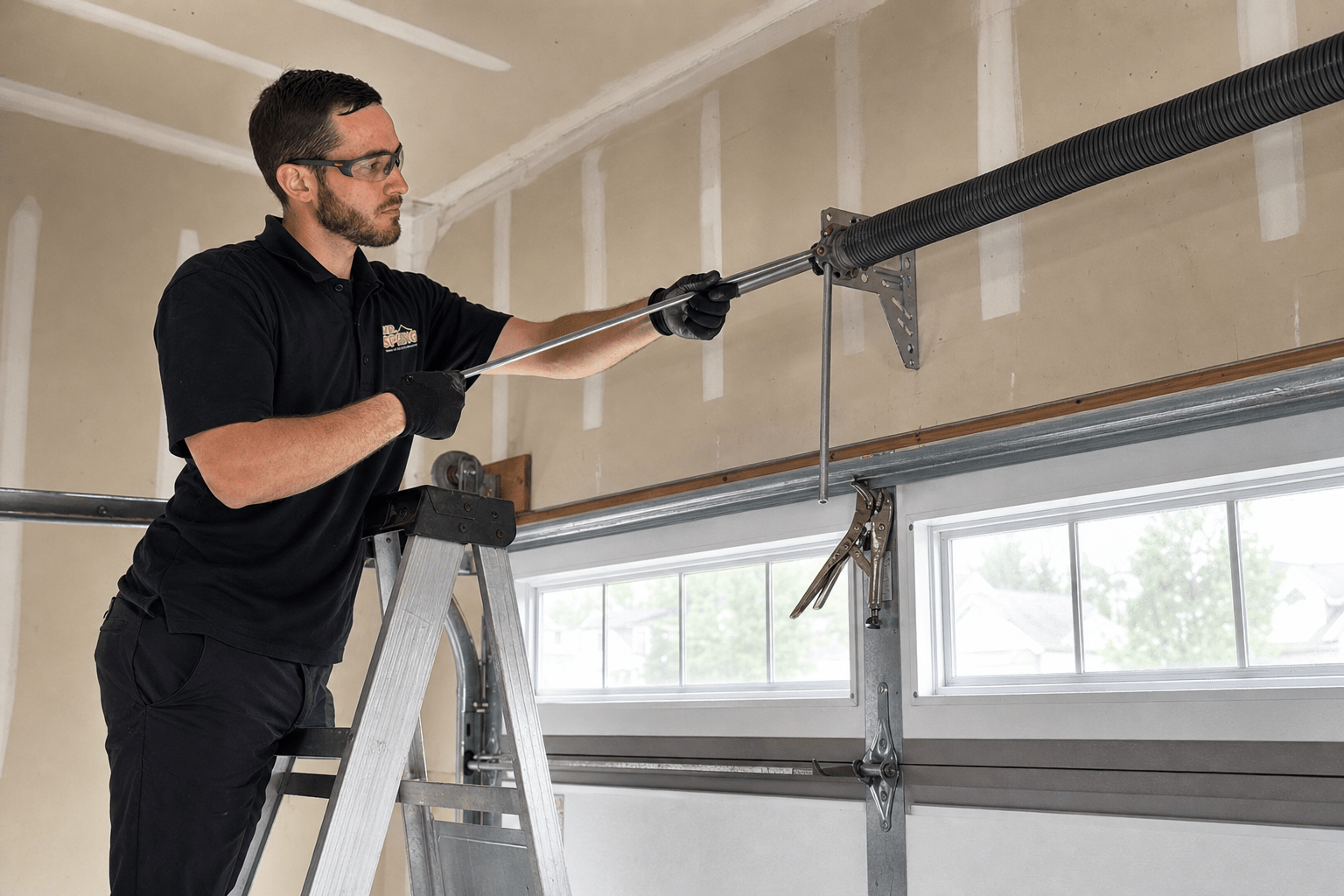
Replacing a torsion spring correctly requires specialized winding bars and an exact understanding of the tension, measured in turns, that matches your door's weight. Get that math wrong and the door either slams shut or won't close fully. Extension springs are somewhat more accessible but still carry real tension, and should only ever be worked on with the door fully closed and the spring completely de-tensioned.
The $250 to $600 per spring a professional charges for this job is inexpensive insurance next to the alternative. It's one of the most consistently flagged DIY home-repair risks for exactly this reason.
Spring replacement in Minneapolis and St. Paul runs $250 to $600 per spring for torsion and $200 to $450 per spring for extension, with most two-spring jobs landing between $500 and $1,200. High-cycle springs are included in our pricing and last significantly longer, so it's worth asking for them at replacement. This isn't a DIY project; the safety risk is real, and professional service is genuinely affordable next to the alternative.
Mr. Spring provides same-day garage door spring repair and garage door spring replacement across the Twin Cities, with transparent pricing and no surprises. Call or request a quote online.
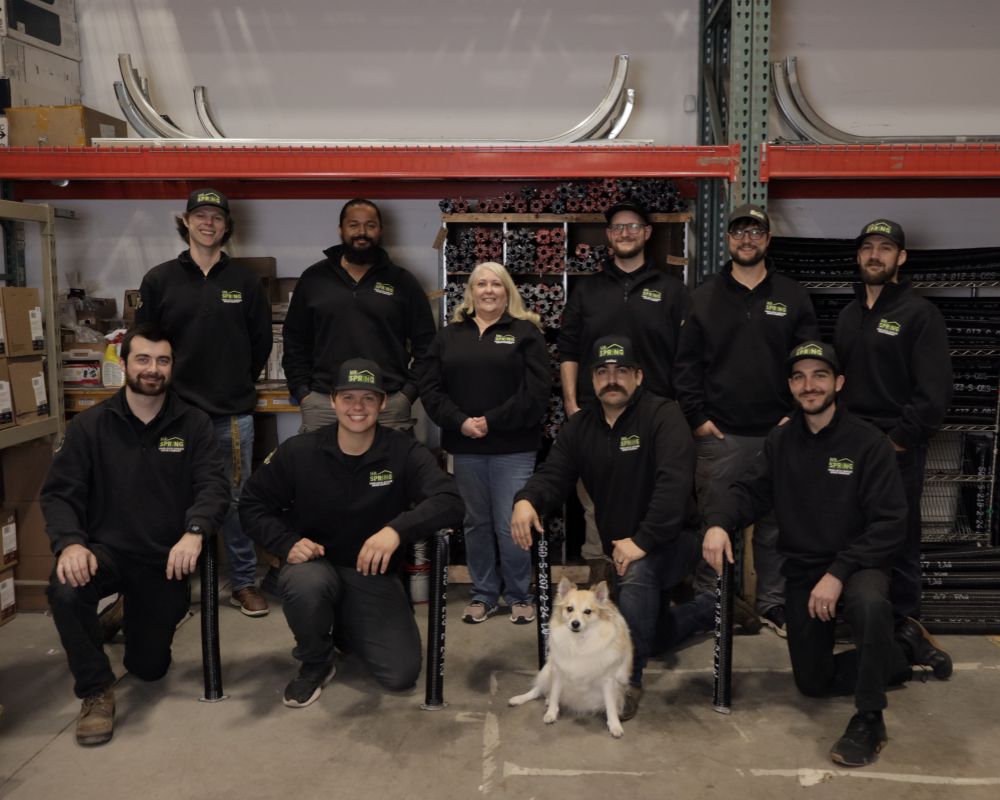
At Mr. Spring Garage Doors, we don't perform surface-level tune-ups. We deliver detailed inspections designed to catch issues early and prevent costly system failures. Our technicians are trained to identify wear patterns that less experienced providers often miss, helping you avoid unnecessary repairs and replacements.
Preventative maintenance is not an upsell. It is a smart investment in reliability, safety, and long-term cost control. Waiting for a breakdown often leads to more extensive damage and higher repair costs.
We are a locally owned and operated business serving the Twin Cities metro. Our owner, Joe Schwartz, is a lifelong Minnesotan who understands firsthand the demands that Minnesota weather places on garage door systems year-round. Every maintenance visit we perform is built around protecting your system for the long haul, not just getting through the call.
If your garage door has not been professionally serviced within the past year, now is the time. Schedule your maintenance today and keep your system running smoothly while avoiding unexpected expenses.