
Quick answer
A garage door torsion spring mounts on a shaft above the door, while an extension spring runs along the side tracks. Both do the same job of counterbalancing the door's weight, but they're not equal. Torsion springs cost somewhat more to replace but are safer, smoother, and better suited to Minnesota's temperature swings. Extension springs are cheaper but wear faster and can be dangerous if the safety cable is missing. Here's how to tell which one you have, what each costs to replace, and whether a torsion conversion is worth it.
Before comparing cost and lifespan, it helps to know what's actually on your door. The two types look nothing alike.
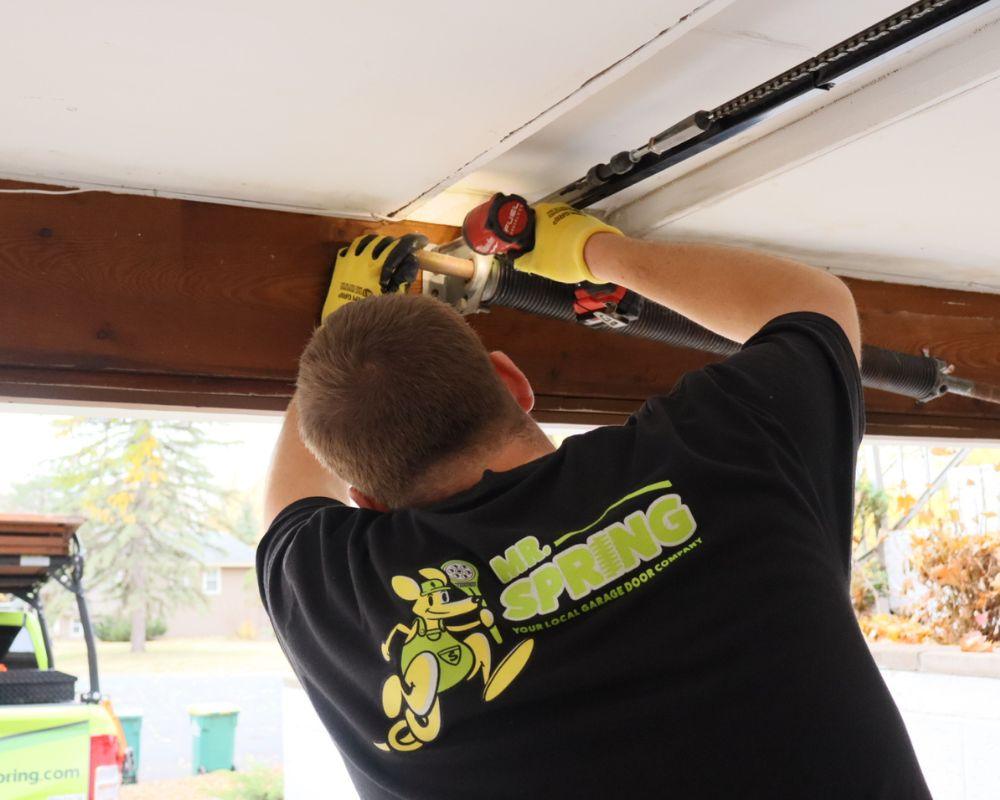
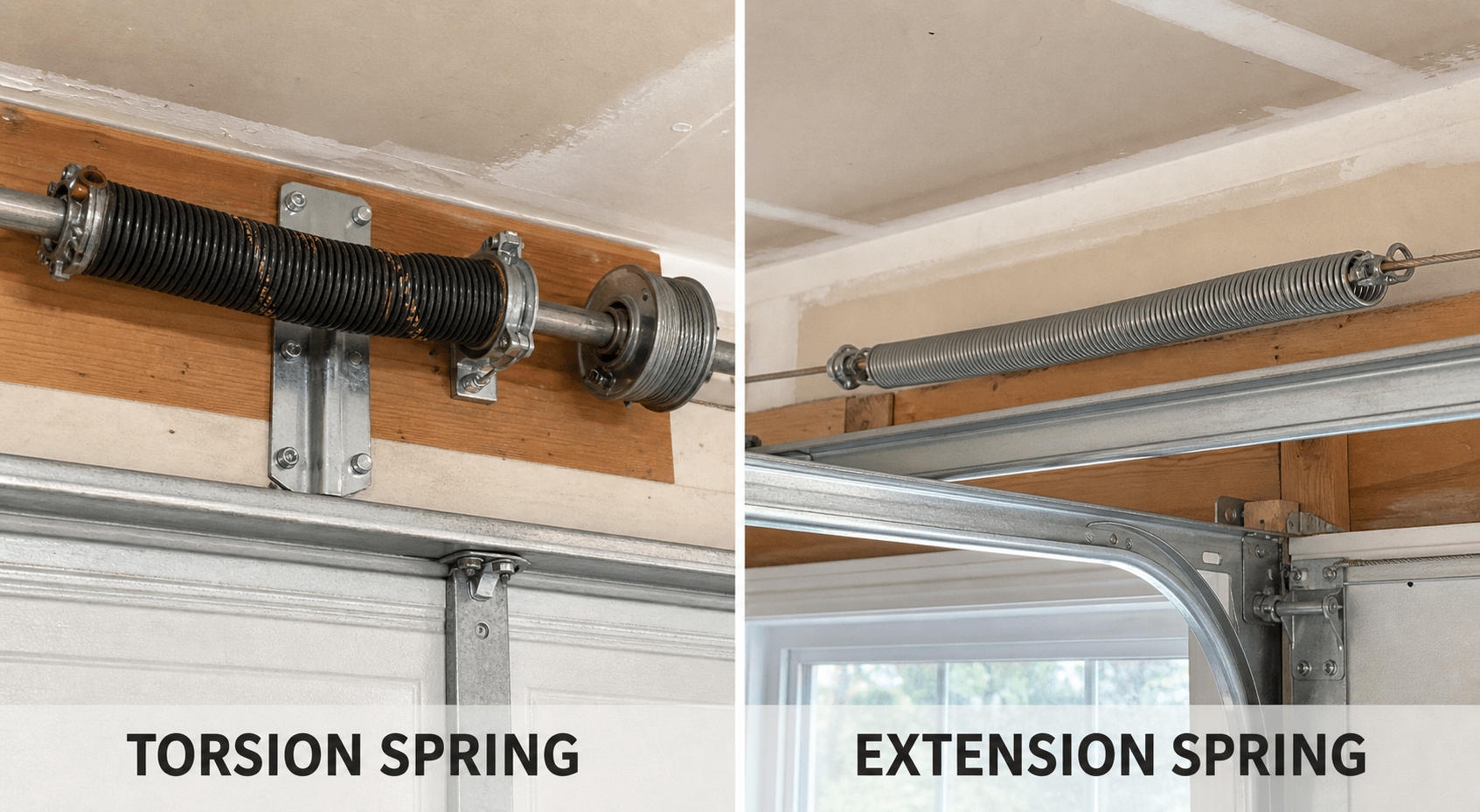
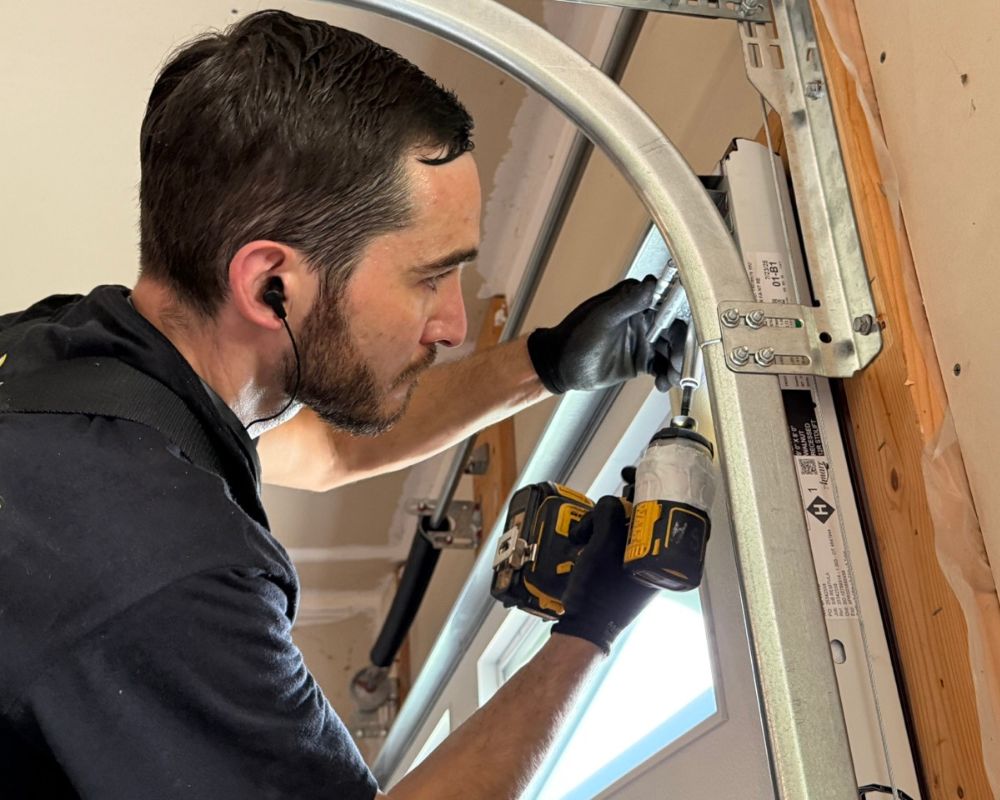
Torsion springs mount horizontally above the door on a metal shaft that runs the full width of the opening. They twist, or torque, to store and release energy as the door moves. Extension springs mount along the horizontal tracks on either side of the door, one per side, running parallel to the ceiling. They stretch to store energy and contract to release it.
The quick check: a long metal rod above the door with a spring wound around it means torsion. Springs stretching out along the sides of the tracks means extension.
Homes built or updated after the mid-1990s are almost universally fitted with a garage door torsion spring. Extension springs show up more in older homes and lower-cost door installations. Some torsion setups use a single spring above the door; heavier two-car doors often use two, one on each side of the center bracket, which also means one spring can fail while the other still holds.
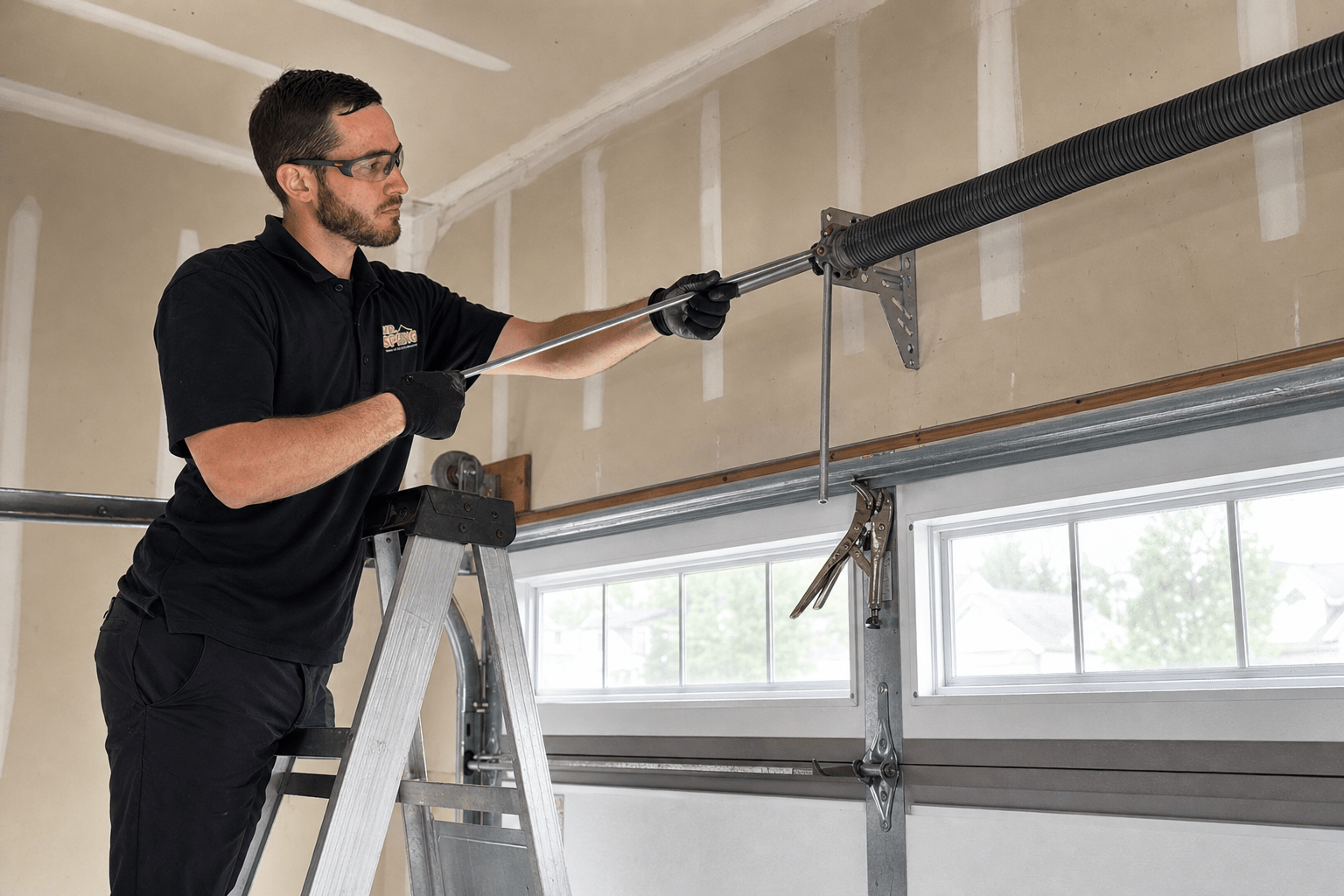
Torsion springs wind and unwind around the shaft as the door travels, so the spring's torque, not the opener or the cables, carries the door's weight. That's what produces the smooth, evenly balanced lift torsion systems are known for.
Extension springs stretch when the door closes and snap back as it opens. They require a safety cable threaded through the center of the spring to keep it from flying across the garage if it snaps. Without that cable, a broken extension spring is a projectile, not just a nuisance.
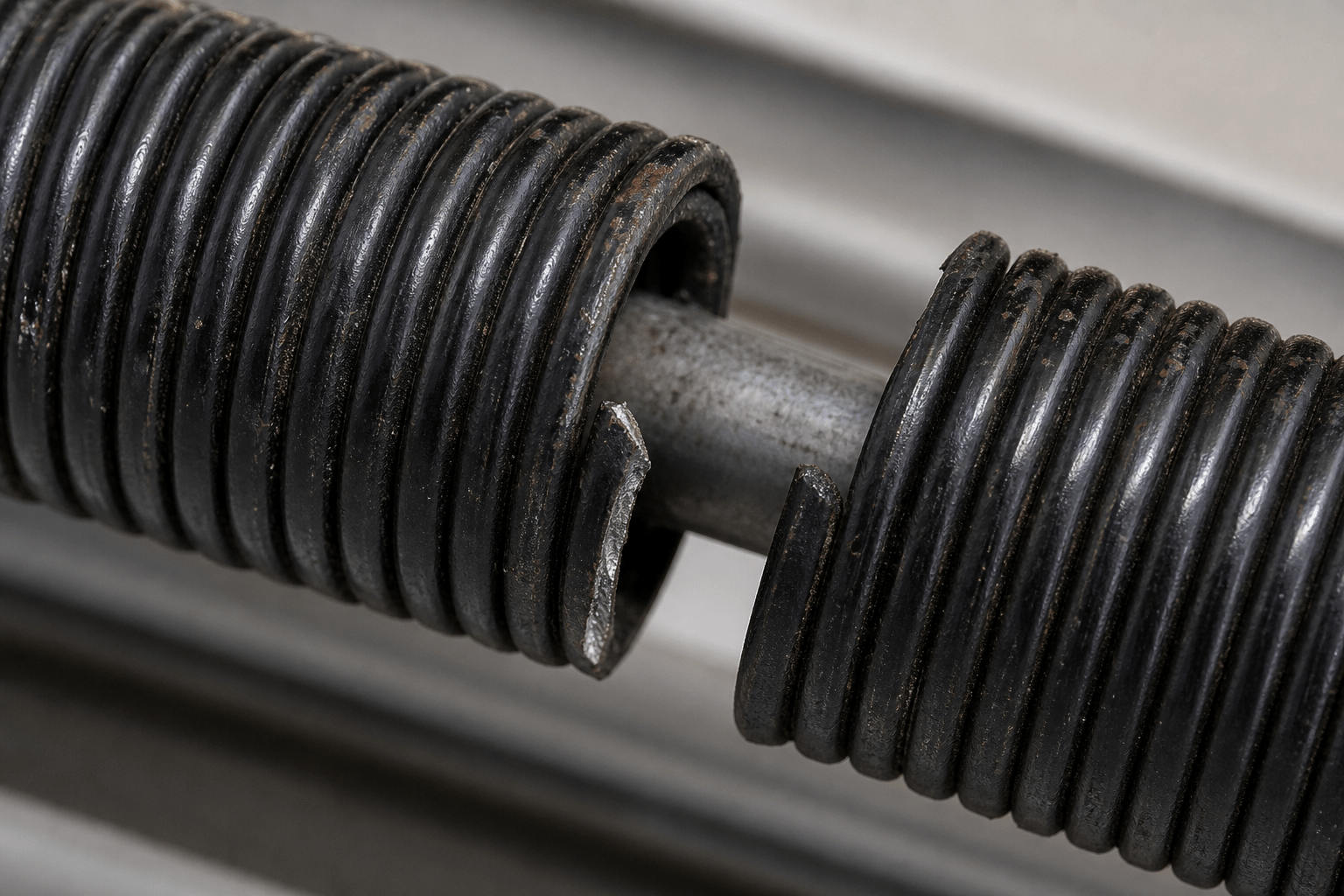
This difference matters in two ways. For safety: a snapped torsion spring stays contained on the shaft, while a snapped extension spring without a safety cable can cause real injury or property damage. If your door has extension springs, it's worth confirming the safety cables are actually in place. For operation: torsion systems lift evenly on both sides, while extension spring tension can drift unevenly over time, causing the door to twist slightly as it travels.
Extension springs cost less upfront, but that's not the same as being the better long-term value.
Extension spring replacement runs about $200 to $450 per spring, or $400 to $900 for a pair installed, since the parts and installation are both simpler.
Torsion spring replacement runs about $250 to $600 per spring, with high-cycle springs included at the upper end of that range. The higher cost compared to extension springs reflects the spring quality, the winding-bar requirement, and the precise tension calibration torsion systems need.
The most common job, replacing both torsion springs on a standard two-car garage door, runs roughly $500 to $1,200 total in Minneapolis and St. Paul.
If you're replacing extension springs and the door is otherwise in good shape, ask your technician whether a torsion conversion makes sense at the same visit. We'll price it as part of your free estimate. It costs more than a like-for-like replacement, but it eliminates the long-term performance and safety tradeoffs of an extension system.
Both standard torsion and standard extension springs carry the same baseline rating: 10,000 cycles, roughly 7 years at 4 cycles a day (one open plus one close equals one cycle).
In practice, torsion springs tend to outlast extension springs in real-world use. Torsion springs distribute stress evenly across the full coil on every cycle, while extension springs concentrate stress at the hooks and end loops, which are the most common failure points. Extension springs also degrade faster if the door's tension becomes uneven, since a slightly out-of-balance door puts disproportionate load on one side of the system.
High-cycle springs are available for both types, but torsion high-cycle springs are more widely available and more commonly recommended: 20,000-cycle torsion springs are a standard upgrade, and 30,000-cycle versions exist for heavy-use doors. For a primary-entry attached garage in Minnesota, where 4 to 6 cycles a day is typical, a 20,000-cycle torsion spring lasts roughly 10 to 14 years compared to 5 to 7 years for a standard spring.
Minnesota's temperature swings, from well below zero in January to 90-degree stretches in July, put more stress on garage door springs than most homeowners realize. Metal contracts in extreme cold, which increases the resistance a spring works against on every open cycle. That doesn't snap a healthy spring outright, but it accelerates wear on a spring that's already nearing the end of its rated cycle count.
Lubricant also thickens in cold temperatures, adding friction to every movement. A spring that goes into winter unlubricated works harder on every single cycle from October through March. The result is a predictable pattern: most Minnesota spring failures happen between January and March, when a spring that had only minor wear heading into fall finally hits its limit on a cold morning.
Annual lubrication with an actual garage door lubricant, not WD-40, before winter extends spring life regardless of which type you have. It's a five-minute task and the single highest-return maintenance item for a Minnesota garage door.
If you currently have extension springs, converting isn't required, but replacement time is the natural moment to consider it.
Good reasons to convert: the safety cables on your current extension springs are missing or damaged, which is a real hazard regardless of what you decide about conversion; you're replacing the door itself, since new door installations almost always ship with torsion springs anyway; your extension springs have broken more than once, which suggests the setup isn't well matched to your door's weight; or you simply want quieter, smoother operation, since torsion systems are noticeably smoother in daily use.
Reasons to skip it: your extension springs were recently replaced and the door is well balanced, or your garage has unusually low headroom that makes a standard torsion setup impractical. That last scenario is rare, and wall-mount or low-headroom torsion alternatives exist for it, but it's worth a technician's opinion before assuming you're stuck.
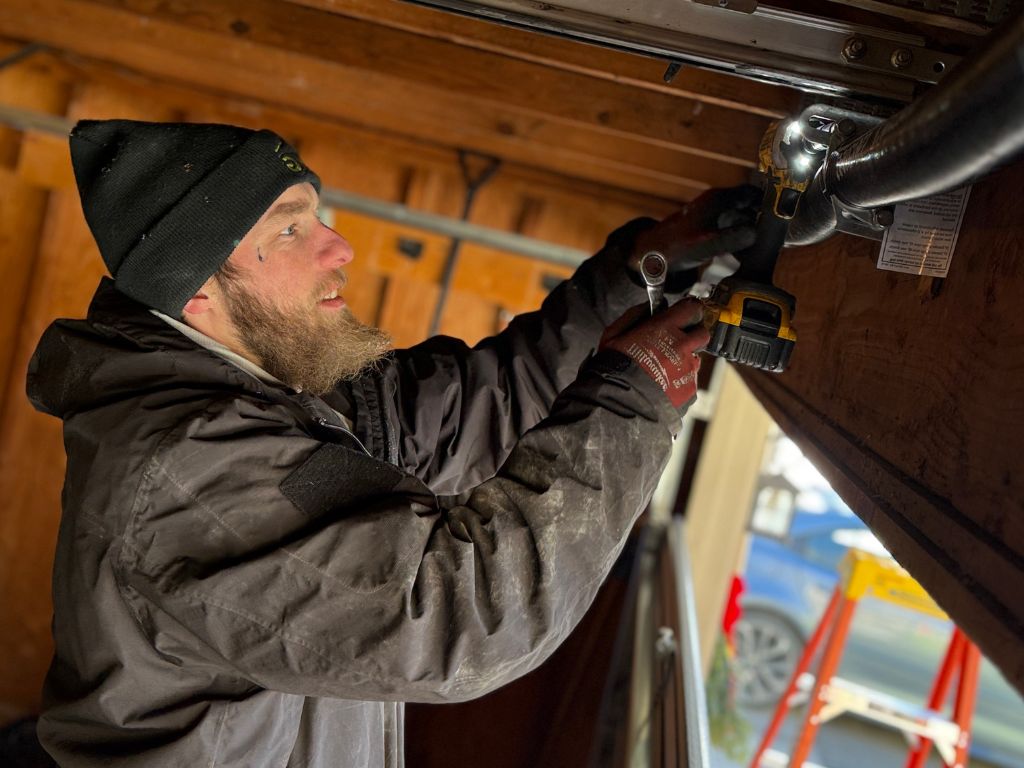
Conversion is a professional job. It involves removing the old extension spring hardware, installing a torsion shaft and bracket, and calibrating the new spring's tension to your door's exact weight. This isn't a project to take on yourself.
Torsion springs are the better option for most Minnesota homes: safer, smoother, and more durable under the temperature swings that accelerate spring wear here. Extension springs work fine if that's what you have and they're in good condition with intact safety cables, but replacement time is the right moment to evaluate a torsion conversion. Either way, ask for high-cycle springs when the time comes. The upgrade is minor in cost and major in lifespan, especially in this climate.
Mr. Spring handles garage door spring replacement near me across the Twin Cities, with same-day service, transparent pricing, and the right spring for your door and your climate. Call or request a quote online.
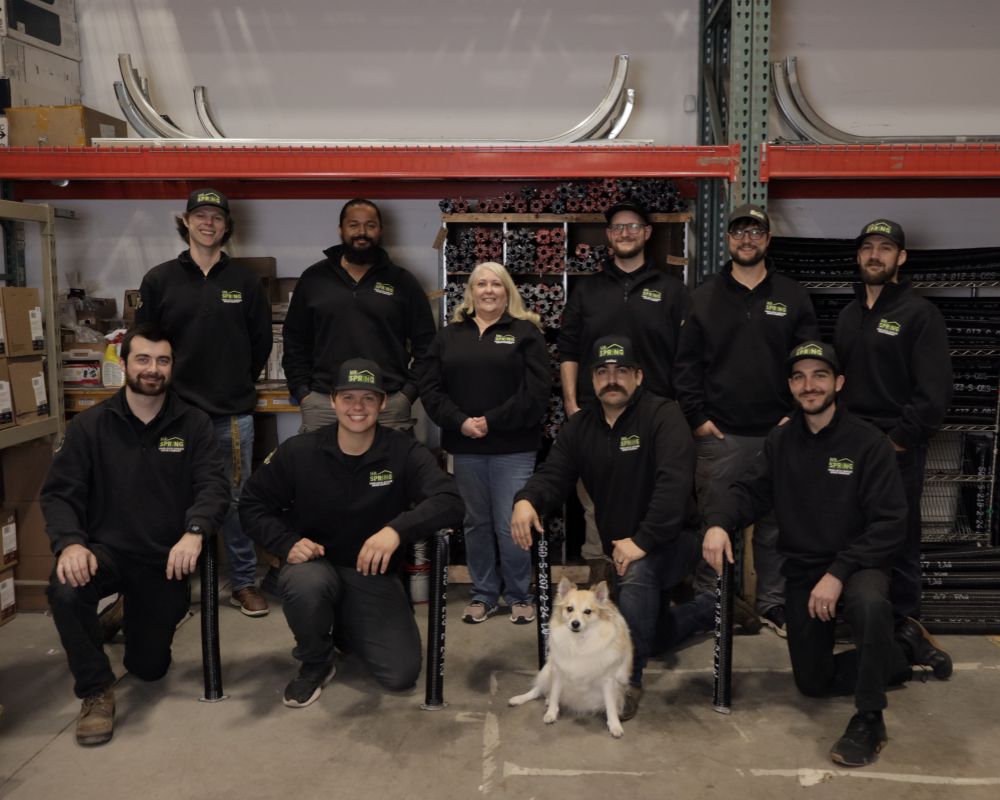
At Mr. Spring Garage Doors, we don't perform surface-level tune-ups. We deliver detailed inspections designed to catch issues early and prevent costly system failures. Our technicians are trained to identify wear patterns that less experienced providers often miss, helping you avoid unnecessary repairs and replacements.
Preventative maintenance is not an upsell. It is a smart investment in reliability, safety, and long-term cost control. Waiting for a breakdown often leads to more extensive damage and higher repair costs.
We are a locally owned and operated business serving the Twin Cities metro. Our owner, Joe Schwartz, is a lifelong Minnesotan who understands firsthand the demands that Minnesota weather places on garage door systems year-round. Every maintenance visit we perform is built around protecting your system for the long haul, not just getting through the call.
If your garage door has not been professionally serviced within the past year, now is the time. Schedule your maintenance today and keep your system running smoothly while avoiding unexpected expenses.