
Reviewed by Tyler Kurr, General Manager of Mr. Spring Garage Doors. Last updated November 11, 2026.
Quick answer: Start with a fully closed door and no suspected spring, cable, or track damage. Follow your opener's manual to disconnect it, then lift slowly with the intended handle. Stop if the door feels unusually heavy, binds, or moves unevenly.
We recommend manual operation only for a normally functioning sectional door, which has hinged panels that move along tracks. An outage can stop the opener; pulling the release cannot fix a damaged lifting system.
Never release an open or partly open door. An unbalanced door could fall unexpectedly. Keep everyone clear if it stopped during travel.
With the door closed, look from the floor for:
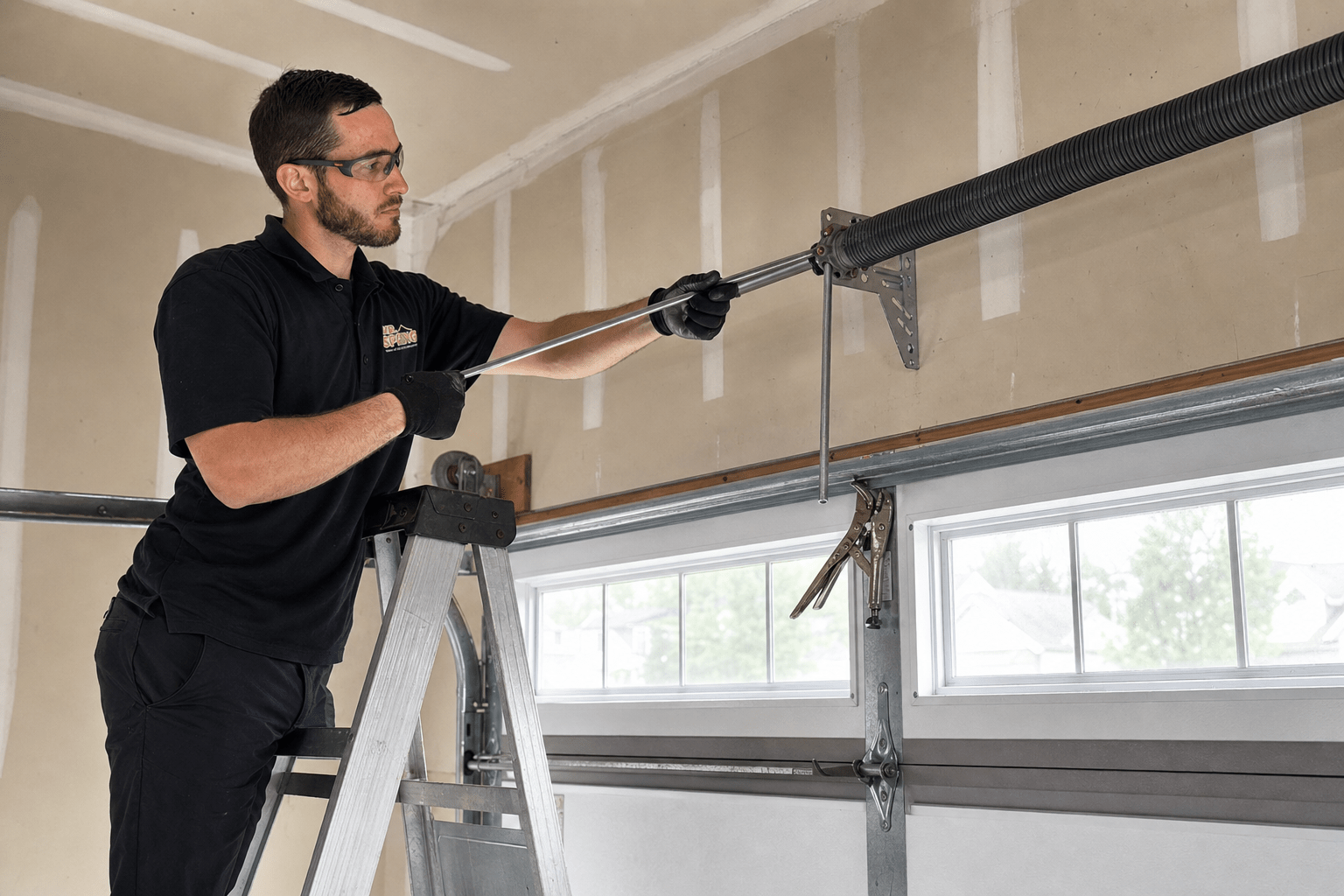
If you suspect damage, stop. No visible damage does not prove the door is safe. Springs, cables, drums, and connected brackets can be under high tension. Leave repairs and adjustments to a technician.
Continue only with a fully closed door and no suspected mechanical problem. Keep the doorway clear.
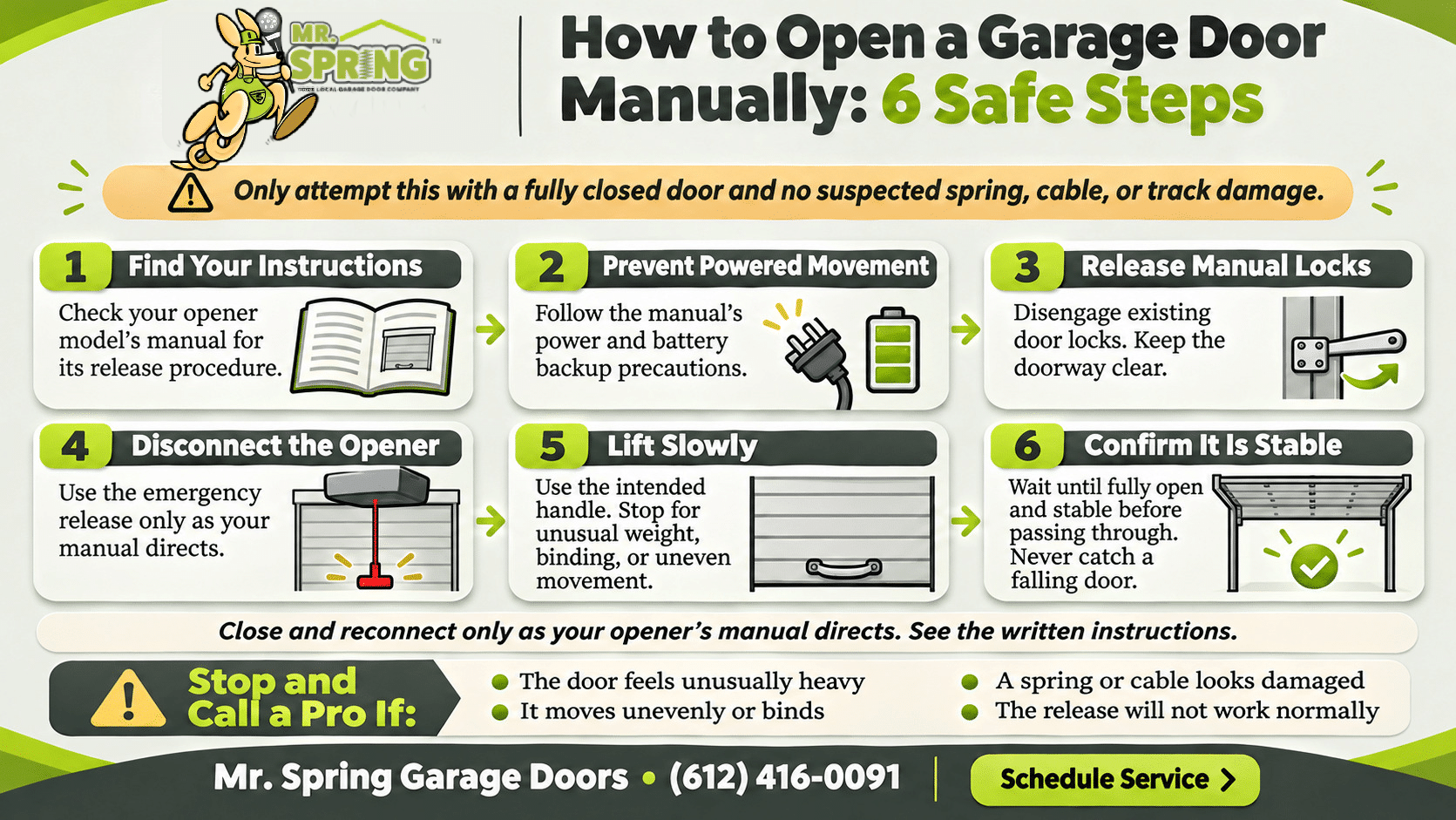
Close it yourself only if it opened smoothly, stays stable, and can be controlled safely.
Clear the doorway and guide it slowly to the floor using the intended handle. Keep hands away from joints and the bottom edge. Do not let it drop or pull it with the release cord. Safety sensors do not control manual movement.
A closed, disconnected door may not be secured. Follow the instructions for an existing approved manual lock. Make sure you have another way to enter the garage before locking the door. Fully disengage manual locks before automatic operation. Never tie or disable the emergency release.
Start with the door safely closed and manual locks disengaged. Follow your model's instructions to restore power and reconnect. Some mechanisms require repositioning the release lever; others reconnect during a powered cycle.
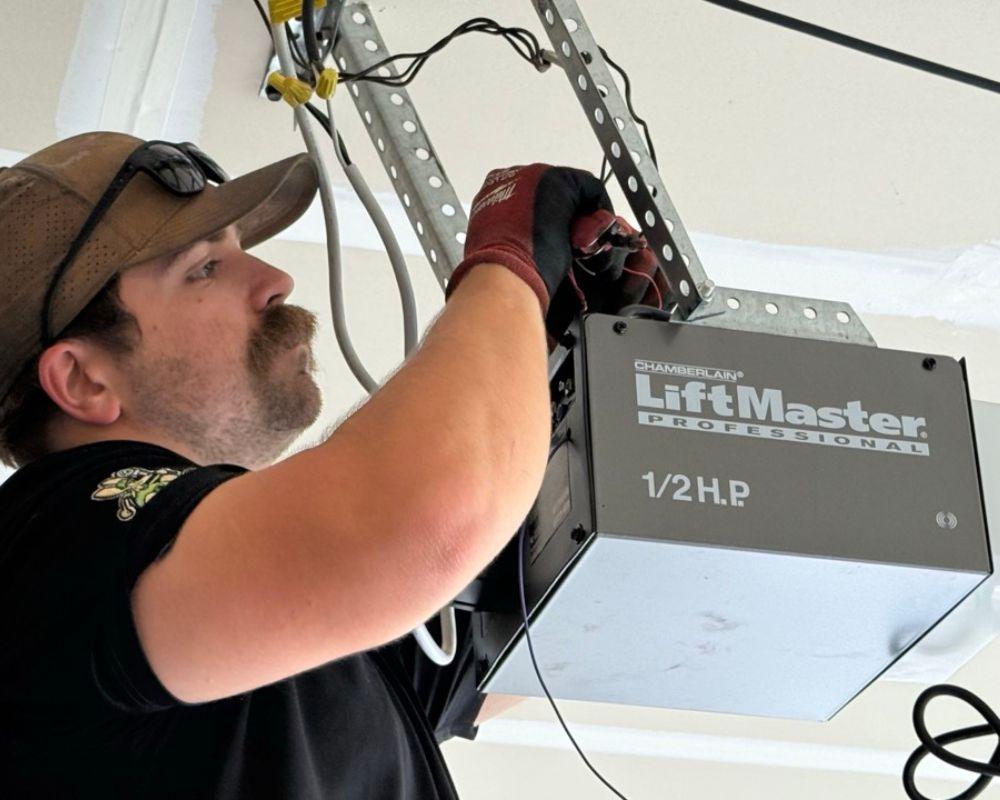
Watch with the opening clear. If the connection will not engage, the motor runs without moving the door, or movement binds, stop. Do not keep cycling it or increase force settings. We can help with garage door opener repair.
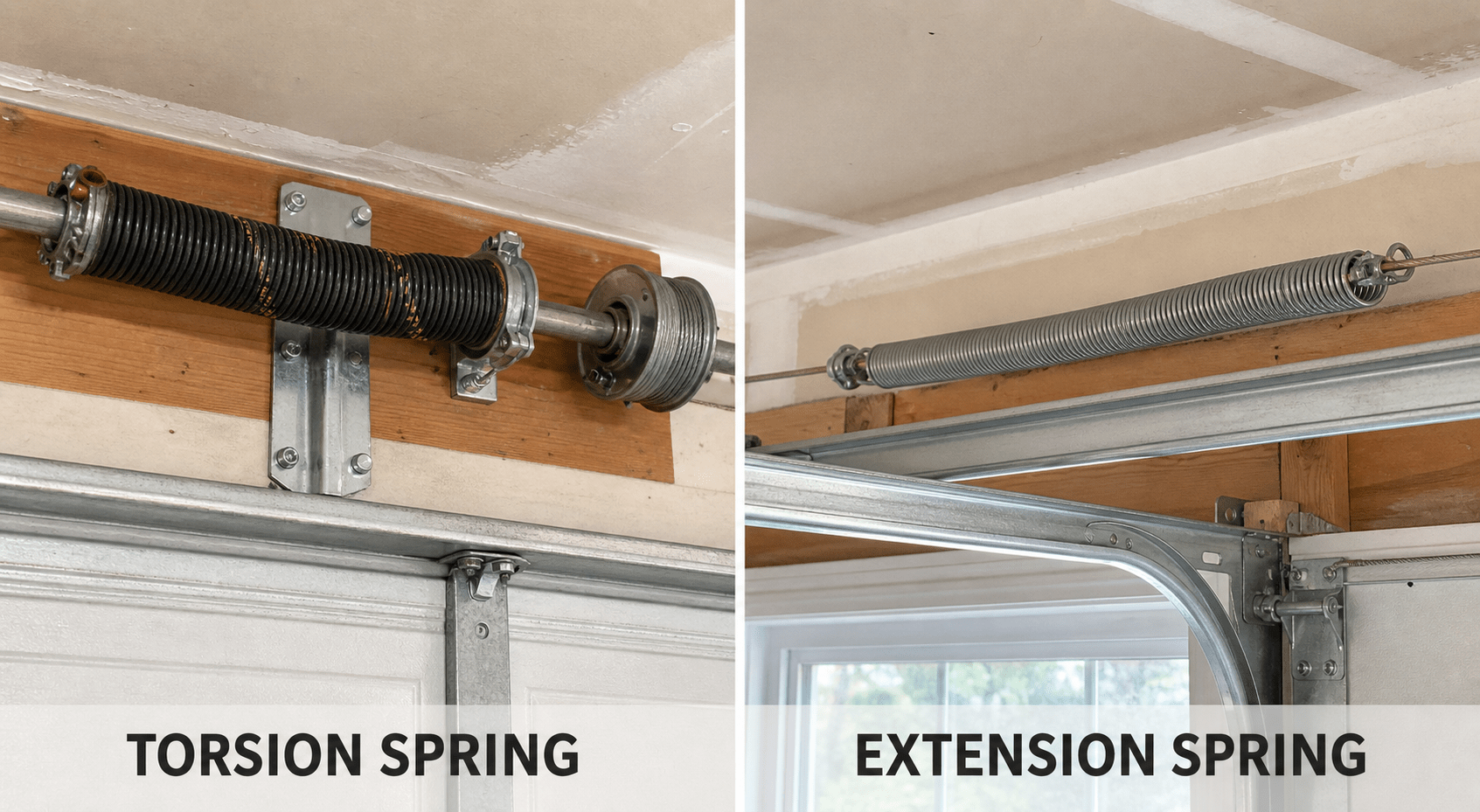
Springs counterbalance the door's weight. A lifting-system fault, binding, or an engaged lock can prevent movement. Unusual weight alone does not identify the failed part.
If the closed door resists lifting, leave it closed. Do not recruit helpers, improvise supports, or use the opener to overcome the weight.
Do not operate a door with a suspected broken spring or damaged lifting component, manually or automatically. Call us at (612) 416-0091 for garage door spring repair.
Call us at (612) 416-0091 if the door is heavy, crooked, stuck, unstable, or damaged, or the release will not work normally. We provide garage door repair in Minneapolis and St. Paul. Tell us the door's position and what happened before it stopped. Keep an unsafe door out of service.
A compatible opener with a functioning, charged backup battery may operate. Backup power cannot make damaged springs, cables, or tracks safe.
The opener may still be connected, a lock may be engaged, or a mechanical fault may exist. Check the manual without forcing anything. If unclear, leave it in place and call us at (612) 416-0091.
Need help with a door that won't move safely? Call us at (612) 416-0091 or use the service button below.